
Why I’ve Swapped Lorem Ipsum for Instructive Text and Why it Works

If you are a designer, there’s a big chance you have heard of Lorem Ipsum. A collection of Latin words (with some taken from a 45BC piece of literature!) that were chosen to be placeholder text for designers, printers and typesetters. I’m going to chat through why I love Lorem Ipsum, respect its game and origins, but why I no longer use it for client work and how I use the opportunity to be instructive instead by providing extra guidance to my clients.
why are we taught to use 'lorem ipsum'?The concept behind using Latin and Lorem Ipsum in design is really cool. It’s said that an unknown printer back in the 1500’s took a section of this Latin text and other Latin words, and printed a type specimen book - a book used by printers to showcase their available typefaces. By using these Latin words, the printer was able to ensure he showcased all the letters, the text felt naturally written with different lengths of words, but it was hard for the average viewer to read so it wouldn’t detract from the design of the font and the individual letters.
The reason we are taught to use Lorem Ipsum in design is the same. We have a design piece that needs to be typeset (the delicate job of putting typography and content into a design piece), but perhaps we don’t have the final content, so we use Lorem Ipsum to replicate the title, paragraphs, subtitles and call to action. By doing this, we ensure that the viewer gets a sense of the design, can see how the design may look once the final copy is provided and isn’t distracted by the words used - …right?
Lorem Ipsum has a place among designers, but not in client workLorem Ipsum can be a beautiful solution in agencies when you are passing design files from one designer to another and need to communicate your vision of the typography quickly. I also think it can be a great starting point if you need to begin to play with a layout and see how the hierarchy of the piece looks before taking the design further. It is also beautiful for type specimen pieces and brand guidelines, which was its first use. It’s easy to access and gives you an immediate feel of how text would naturally flow. I have great respect for it in these uses, and I do use it in these ways. But I no longer use it in my client work because my clients can find it confusing, and I’m missing an opportunity to connect with them and offer instructive guidance on how I need their final content to be provided.
“I love the design, but I can’t understand what is written - can you help?” One of my goals when working with a client is to offer them guidance through the whole design process. I want the process to be kind, supportive and clear. By using Lorem Ipsum, I’m introducing a typesetting practice that they might never have heard of and may feel random. The purpose of Lorem Ipsum is the idea that by using unreadable text, we encourage the viewer to be more focused on the design and layout of a piece - but I’ve found that for people outside the design space, it can create confusion, and isn’t the neutral base we expect and need it to be.
What do I do instead? guide, inform and provide supportInstead of using Lorem Ipsum, here are some other strategies I highly recommend to guide your clients and support their writing, while still encouraging focus on the design of the piece.
Write content that guides your clients in what needs to be provided or written. When you are designing for print, social media or websites, you are in a unique position to see the design of the piece and what the design needs to allow it to go the extra mile. You can write notes to your clients instead of Lorem Ipsum, lay out what information is needed and write the motivations behind the text, so your client gets a sense of what their words need to do here to be impactful. For example, instead of saying “Title to go here. Title to go here.”, you can instead write “Engaging title to go here, keep it 4-8 words!”. Or instead of “Description here”, you can write “Description of your services to go here, keep these snappy but write out your three core services to clearly communicate to viewers what you offer and where you are based.”
You may be able to use your client’s content as a placeholder. For some smaller templates, I can often find the content needed to fill out the designs - either from my client’s websites or in our work. This works well for Social Media templates, especially when a client has told me that they want to talk more about a service that I can read about on their website. By doing this, you are helping your clients see how their content can be used within the design and provide them with a strong starting point.
Input any information you know or can guess. There is often quite a bit of content that I know or can guess based on what I know about my client and the information on their website or social media. Things like their contact information, the main call to actions that they use or what resources they are currently promoting - I can use this information to anticipate parts of the design until the final content is provided.
Repeat as needed. There are some spaces where your written text may need to be repeated quite a few times to fill the space. Such as for paragraph text. This might look like: “Use this 3-4 paragraph space to expand on this service’s title and present the core offering of this service. As you get towards the end of the space, remember to include any important details that the viewer may need to know, such as the length of your work together and availability. Then list out a clear next step for if they would like to move forward with you. Use this 3-4 paragraph space to expand on this service’s title and present the core offering of this service. As you get towards the end of the space, remember to include any important details that the viewer may need to know, such as the length of your work together and availability. Then list out a clear next step for if they would like to move forward with you. Use this 3-4 paragraph space to expand on this service’s title and present the core offering…” and so on.
Ask for design feedback as you normally would. In amongst all of this great advice and insight that you are offering your clients, remember to use part of your email or communication to ask for any design feedback and tell them what you have done with the text. Something as simple as: “Hi Helen, I’ve placed the PDF presentation here for your review. As we don’t currently have written content for the piece, I’ve used the space to highlight the information that we need and provide you with some tips to help you write your content. I’d love to know how you feel about this guidance, as well as the design of the piece, when we meet on Thursday. Looking forward to speaking with you then!”
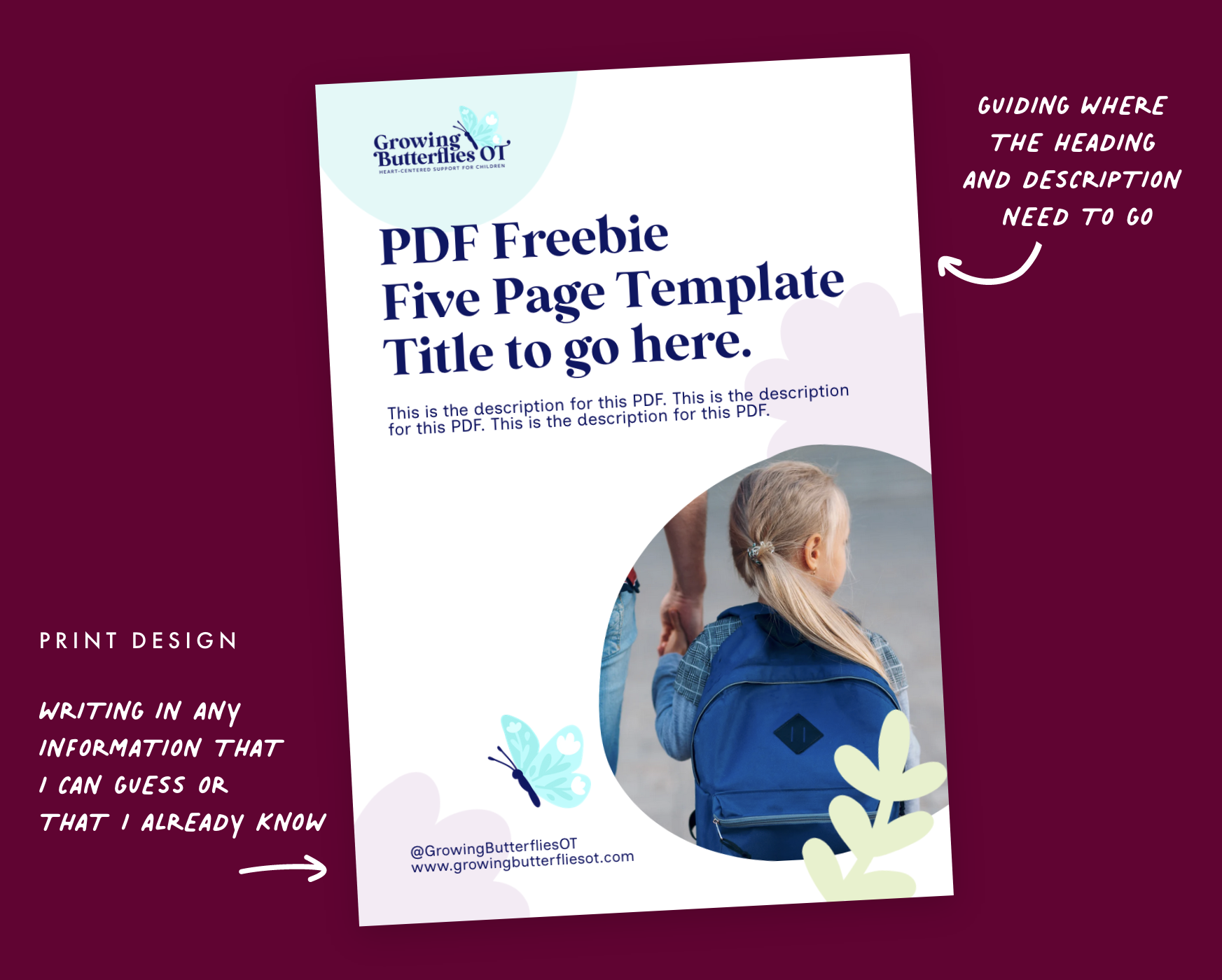
Guiding where the heading and description need to go. And writing in any information that I already know or that I can make good guesses for.
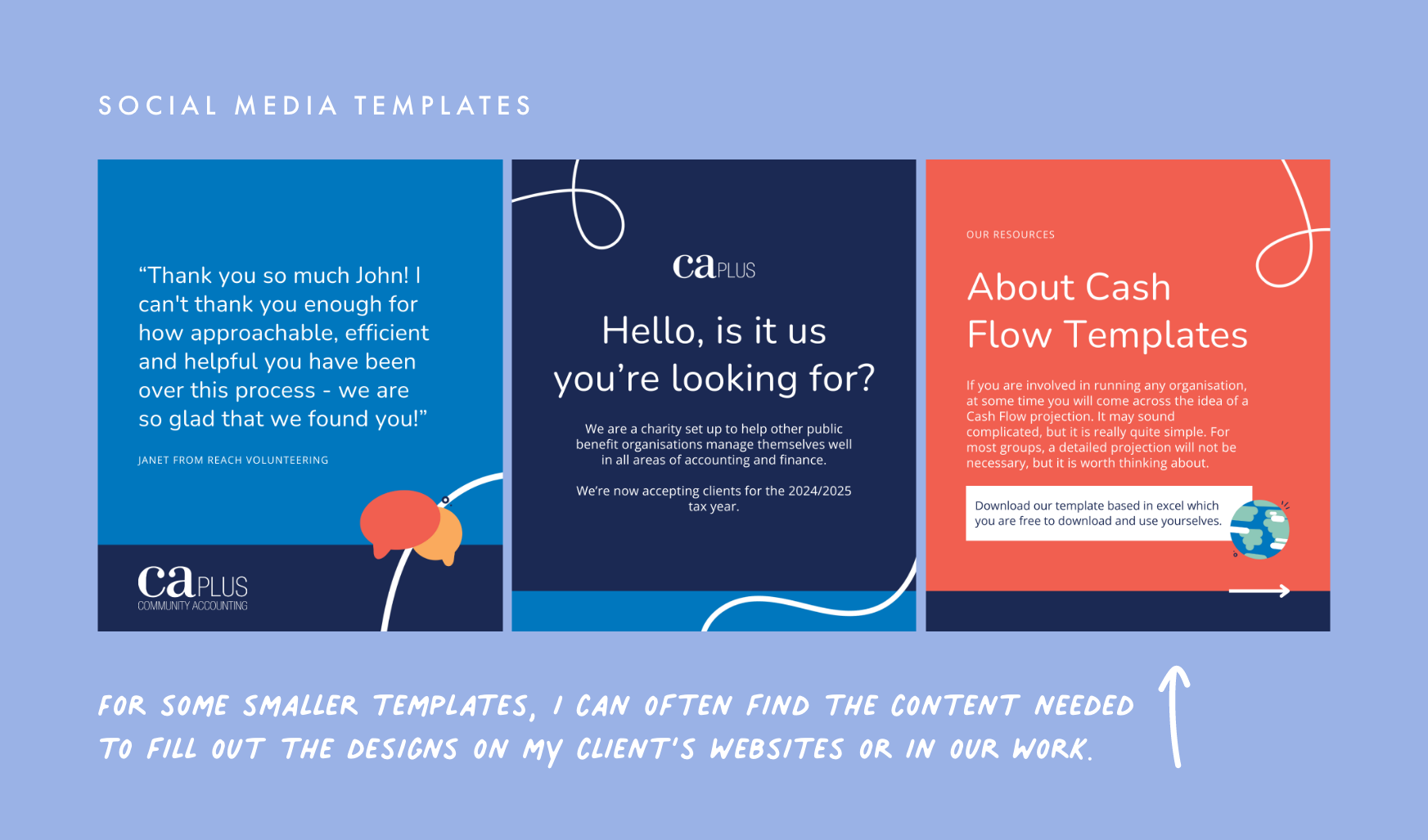
For some smaller templates, I can often find the content needed to fill out the designs - either from my client’s websites or in our work.
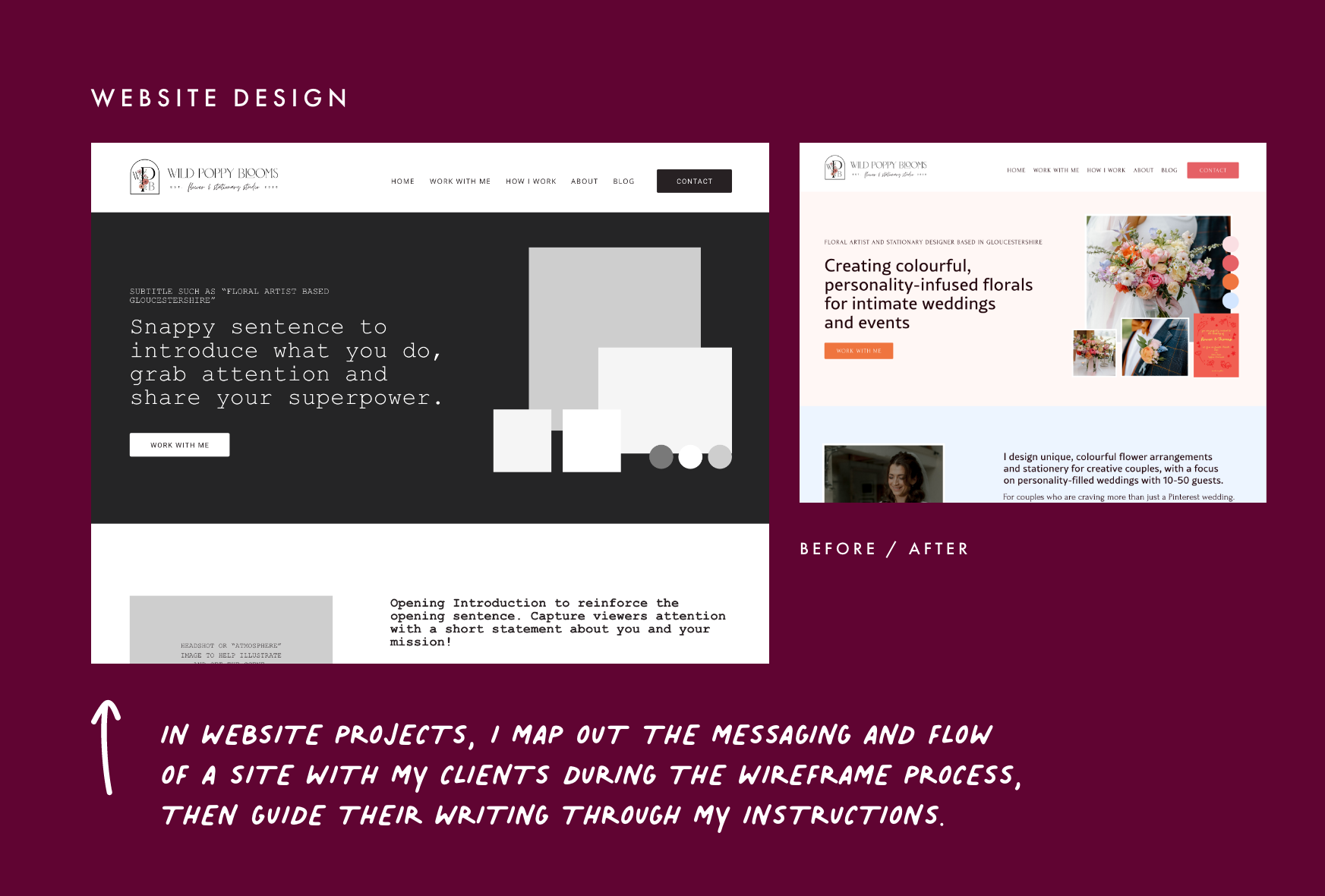
In website projects, I map out the messaging and flow of a site with my clients during the wireframe process, then I can guide their writing through my written instructions in the design.
You look amazing and your clients write better contentAs I said up top, my main motivation for providing this level of care is to help guide my clients through our work together in a way that feels kind, supportive and clear. By offering this level of care, writing thoughtful and insightful directions, and not using a collection of very nice but unreadable Latin words, you can support them as:
You are completely engaged in the project and understand what the design needs to do to work its best. Designers, you know your clients and you definitely know what the design needs! By providing your insight, you are showing your lovely client that you are invested in the design, understand the purpose of the piece and understand how the work can come together to help them reach their goals. This helps build trust in you and your expertise.
You connect even closer to your clients by anticipating their needs and going the extra mile. In my work, I’m always looking for extra opportunities to connect with my clients a little deeper and offer them extra value. Here, you are offering your insight and guidance in a way that isn’t often done and shows an extra level of care and commitment to the project.
You stand out from your competitors. By going against a design industry that only shows designs in Lorem Ipsum, or requires content upfront before work can begin, you can stand out as a supportive and flexible designer (Boundaries are still required! Read more below).
And, your clients will give you better content! I work with one-person businesses and small teams that perhaps don’t have a copywriter on hand and create all their marketing themselves. By creating guidance for the written content and showing the client what the work needs to be the best it can be - you can help them write content that is clearer, more concise and is easier for them to write. Which is a win all around.
Clear communication and boundaries are still neededAs designers, we need clear communication and boundaries at every step to ensure that everyone knows what they’re doing and everyone’s time is respected. This is no different. Even though we are starting the design without final content, I still have a very clear process for when content is submitted to ensure that we limit any confusion, redesigns or changes of direction. For me, this looks like:
Providing the first design with this instructive text inside it and asking clearly for design and content feedback.
Holding a meeting so we can talk through the design and why I made certain decisions, the suggested content, any changes that the client would like, and then asking the client to provide the written content before the second design is provided. Asking them what timeframe they can provide that in, and then sending soft and kind reminders at the agreed date. I choose to hold all review meetings in person to allow for communication to be clear, and to allow you and your client to collaborate and problem-solve in real time. I adore it and truly think it makes the process smoother and the work better.
Receiving the text completed before working on a second design. If text is incomplete, I’ll highlight this and ask them to provide any extra details that I need - sometimes things get missed!
Then, once all content is provided, creating a second design - this is often very close to the first due to the guidance we gave for content.
Allow the client to review and make any final text tweaks needed. You can hold a boundary to limit your changes to 3 rounds, which is very common. Just make sure you communicate this clearly in your process document, contract and as you approach the final round with your client - something like “This is the final opportunity for us to make changes to this piece within my policy of 3 changes per piece. So please review the presentation carefully to ensure nothing is missed! If extra time is needed, let me know and we can discuss a change to our original quote.”
My final love letter to Lorem IpsumLorem Ipsum, you are so great for when I need to pull ideas together quickly or need to show other designers how I’m imagining a piece will look with all the titles, subtitles and styling added in. I love that you originated in printing - I love letterpress and all things print, and I’m so sad that it’s a dying art form. But we have an opportunity here to guide our clients, show them how much we value and love their project, make it easier for them to provide high-quality content, AND make sure the design of our work stems from a really clear strategy. And this is what I love about my job, want more designers to find and would recommend you make the switch wholeheartedly.
Kind regards,
Amy

Hey! I’m Amy, and this is Begin Studio.
Here I create unique, thoughtful brands for small businesses in the UK and beyond. I guide my clients from logo and branding design all the way through to packaging, websites and even the social media launch of their new business. I also run a small blog with resources for designers who are just starting out in the freelance world or are recent graduates.

For offers and resources directly into your inbox. ✨